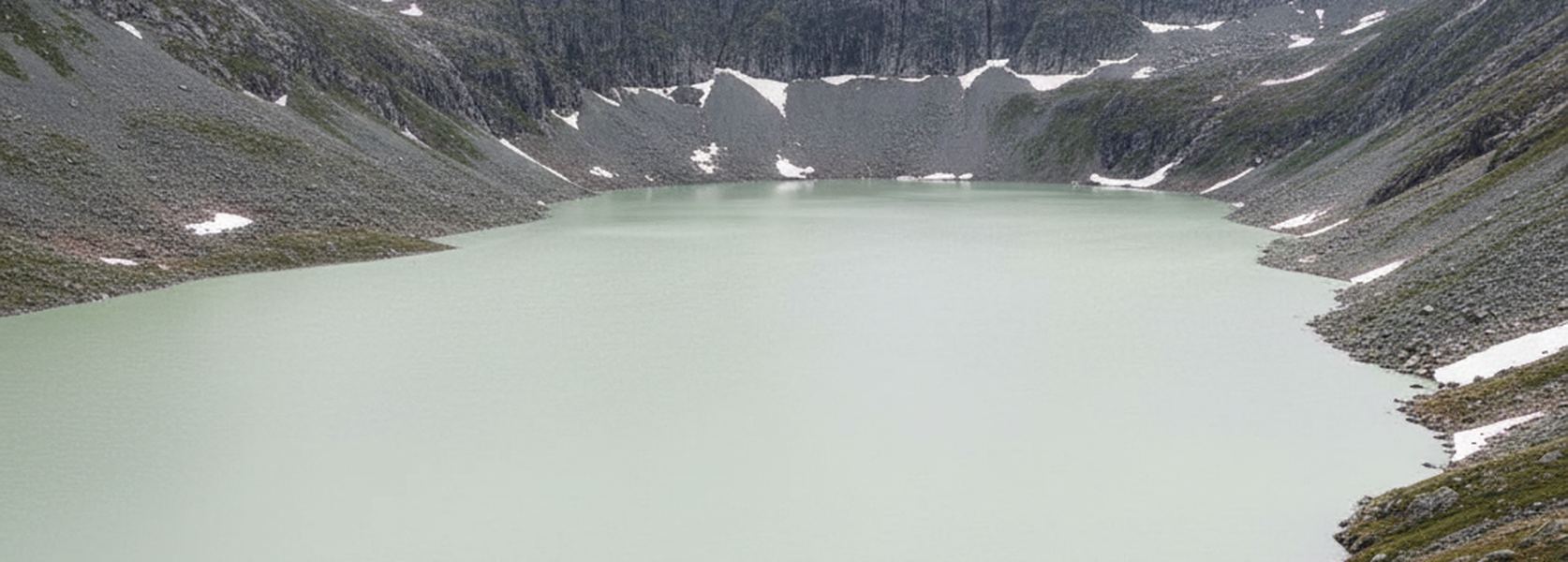
The warden takes people she knows, which is how you reserve a walking week in Jotunheimen, Norway
The honest answer first, because it is the axis this catalog is sorted on: this week does not exist without an introduction. Three of its eight nights are not sold to the public at all. To reserve a walking week in Jotunheimen, Norway of this shape you need somebody the warden already knows, and that is the whole of the job.
- Starting figure, per person
$3,560
- Nights
- 8
- beds you will learn
- 3
- Country
- Norway
- How much of this you could arrange without us
- it does not exist without an introduction
Confirmed as a final figure once the supplier holds the dates. Getting to the country is not included.
- Whatever is agreed comes back to you in writing from the supplier, before any money moves.
- No card is asked for on this site and none is stored: the supplier takes payment on its own terms.
- A request sent through the form is answered in writing within one working day.
What the eight nights actually are
Three beds over eight nights, which means you unpack three times and carry a day sack for the rest of it.
Nights one to three sit in a side valley off the north road at about 700 m, in a farm that lets four rooms. Days from there run 14 to 18 km with 800 to 1,000 m of climb, out and back up two valleys, on ground that begins as pasture and ends as boulder.
Nights four to six are the reason the week exists: a wardened house at about 1,050 m at the head of a valley with no public road into it. You walk in, eleven kilometers, while your bag goes ahead on a tracked vehicle. Dinner is at seven, one sitting, whatever the kitchen cooked.
Nights seven and eight are down in the west at 300 m, in a valley that takes several times the rain of the first one, with a waterfall at its head falling 275 m clear of the rock.
Two of the eight days are walked with a mountain leader. One is a rest day, and the office assumes you will use it.
Why this ground is slow
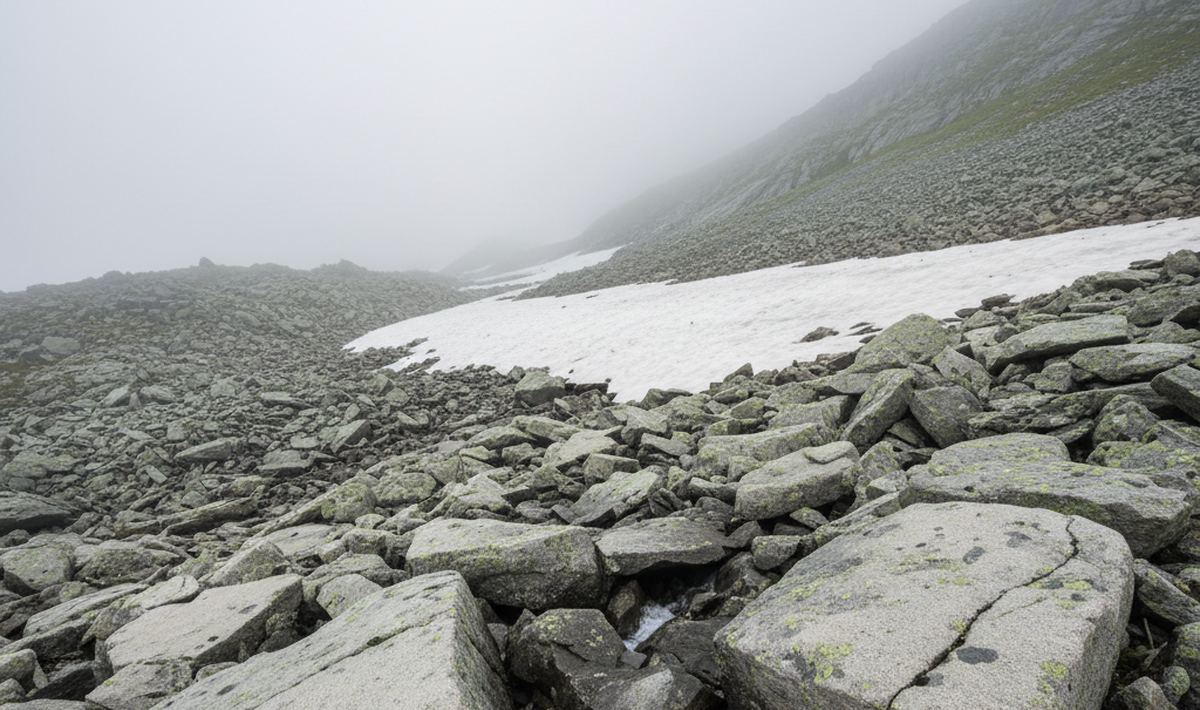
The rock here is gabbro and it is rough. It takes skin off a knuckle, it holds a boot sole in the rain, and it comes in blocks the size of a suitcase that shift under your weight. There is a path in the sense that somebody painted marks on the stone every fifty meters or so. There is often no path in the sense of a made line to walk along.
Plan on two and a half kilometers an hour and be pleased when it turns out to be three. A 19 km day with 1,100 m of climb is a nine hour day, not a six hour one, and the last two hours are always the slowest, because everything below the snow line is wet and the blocks are further apart than they look from above.
Rivers are the other thing. Bridges go in around midsummer and come out in September; outside those weeks you wade. The water comes off snowfields at four to six degrees, thigh deep on the wide crossings. The trick is to keep your boots on, cross square to the current, and write off the afternoon.
Light, and the hours it buys you
In the third week of June the sun is up here for something close to nineteen hours, and the gray hour or two that stands in for night is bright enough to read a map in. That is what the week is built on. You can start at eight, sit for an hour by a lake at two, take the long way round a shoulder because the cloud lifted, and still be in before the kitchen closes.
Weather does not follow the light. July afternoons run 12 to 16 degrees in the valleys and 3 to 8 degrees up high, frost is normal above 1,500 m on a clear night in any month of the summer, and snow sits in the north facing hollows all year. The range also splits the country's weather in half. The first base stands in one of the driest pockets in Norway, under 400 mm of rain a year. The last base, thirty kilometers west, takes several times that, and you will probably meet it on the way there.
Two of the eight days will be walked in cloud. That is not pessimism, it is the average.
What Etre Super Travel is for here
Take the week apart and most of it is public. The valley farm at the start has a telephone and somebody answers it. The two nights in the west can be had by anyone with an email address and a fortnight of patience. The boat along the lake is a ticket you buy at the jetty on the morning, in person, and we will not put it on a bill and pretend we arranged it.
The middle three nights are the part that is not for sale. Ten rooms at the head of a valley, no listing, no form, no number handed out; the warden takes people she knows and people vouched for by somebody she knows. Etre Super Travel sits on that short list, and sitting on it is the entire service being offered. The same is true of the two guided days: the leader takes a handful of parties a summer and has never advertised for one.
Money does not come through here. The farm, the warden and the leader each bill you themselves, in their own currency, by their own method. We are paid afterwards, by them, out of their end of it. No card number is ever read out to this office, because there is nowhere here to put one.
From $3,560 per person, and who it is wrong for
From $3,560 per person covers the eight nights, breakfast every day, a packed lunch on the seven walking days, dinner at the two bases where dinner is the only thing there is, the bag lift in and out of the middle valley, the two days with the leader, and the road transfers between the three beds. It does not cover your own flights, the lake ticket, drinks, hired kit, or anything you do on the rest day. The figure moves with the season and with the exchange rate, and the one you pay is confirmed before a single bed is held.
Who it suits: somebody who walks 20 km at home without making a plan about it, who has used a map in cloud and was not frightened, and who can eat at seven because seven is when the food is ready.
Who it does not: anyone who wants a made path underfoot, a choice at dinner, or a certain answer at nine in the morning. Anyone for whom this would be a first mountain week. And anyone who needs to stay within an hour of a hospital, because from the middle valley the answer is a helicopter and a long wait for it.
Short answers to the usual doubts
Can the office reserve the flights?
No. Passage by air and by water sits outside this desk entirely, which leaves the whole of that reservation in your hands from start to finish. What we will do is tell you which morning you need to be standing in the valley and how the ground journey works from the airport most people use: roughly five hours by road, or a train up the valley and then a bus that runs twice a day in summer. Reserve the flights whenever suits you. The beds are the part that has to be settled first.
How fit does this actually need me to be?
Seven walking days at 14 to 21 km, with 800 to 1,200 m of climb each, on loose stone for hours at a stretch. If you can do 20 km with 900 m of ascent on a Saturday and wake on Sunday wanting to repeat it, you will be fine. If your walking is flat and under 15 km, you will have a hard fourth day and a harder fifth one. Nobody times you and nobody waits at a summit tapping a watch, but the kitchen at the middle base stops at seven and there is no other kitchen.
What happens to the bags?
They go in and out of the middle valley on the farm's tracked vehicle, once each way, along a summer track no car can use. You carry a day sack: waterproofs, food, a litre and a half of water, a warm layer, map and compass. At the first and last bases the bags travel by road. If the vehicle is off the road, which happens most summers at least once, the walk in is eleven kilometers and you carry what you packed, so pack for that instead.
Is there hot water, and can I charge a phone?
At the first and last bases, yes to both, without having to think about it. At the middle one, hot water runs for about two hours in the evening and the tank holds what the tank holds; last in gets what is left. There is one shared socket in the dining room and a small solar array behind the barn, so a phone charges and very little else does. There is no mobile signal anywhere in that valley. The warden keeps a radio, and that is the whole communications system.