Sleep in four places, cross six passes, and reserve a pass to pass walking week in the Dolomites
Four beds in ten nights, six passes between them, and one honest number: the hard half needs a telephone call. Six of the nights you could take yourself in twenty minutes online. To reserve a pass to pass walking week in the Dolomites with the huts and the van attached, somebody has to ring Italy in the evening, in Italian.
- Starting figure, per person
$3,140
- Nights
- 10
- beds you will learn
- 4
- Country
- Italy
- How much of this you could arrange without us
- the hard half needs a telephone call
Confirmed as a final figure once the supplier holds the dates. Getting to the country is not included.
- Whatever is agreed comes back to you in writing from the supplier, before any money moves.
- No card is asked for on this site and none is stored: the supplier takes payment on its own terms.
- A request sent through the form is answered in writing within one working day.
Ten nights, four beds, six passes
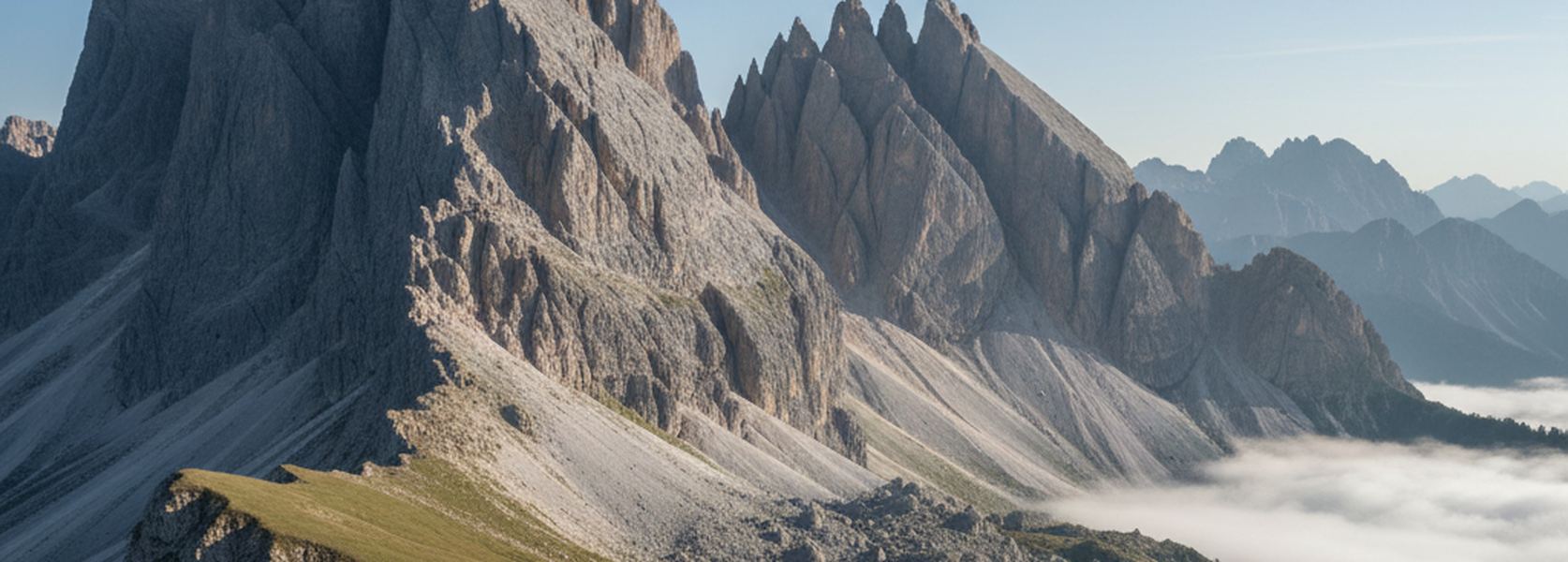
The week has four beds in it, not ten. Three nights in a room in Corvara at 1,568 meters, while the legs remember what they are for; two nights in a hut under the Tofane at about 2,300 meters; two nights on the ridge above Passo Giau at about 2,400 meters; then three nights in a valley room near Alleghe at 979 meters, under the long wall of Civetta. Eight of the ten days are walking days. The passes between the beds are Gardena at 2,121 meters, Valparola at 2,192 meters, Falzarego at 2,105 meters, Giau at 2,236 meters, Forcella Ambrizzola at 2,367 meters and Staulanza at 1,766 meters. Added up, the week comes to roughly 110 kilometers on foot and about 5,800 meters of climbing, taken in stretches of 600 to 1,150 meters at a time, four and a half to seven hours moving. The main bag travels by van between the two valley bases. On the four hut nights you carry what you need on your back, which for most people is seven or eight kilos with water in it. From $3,140 per person.
What the ground is like
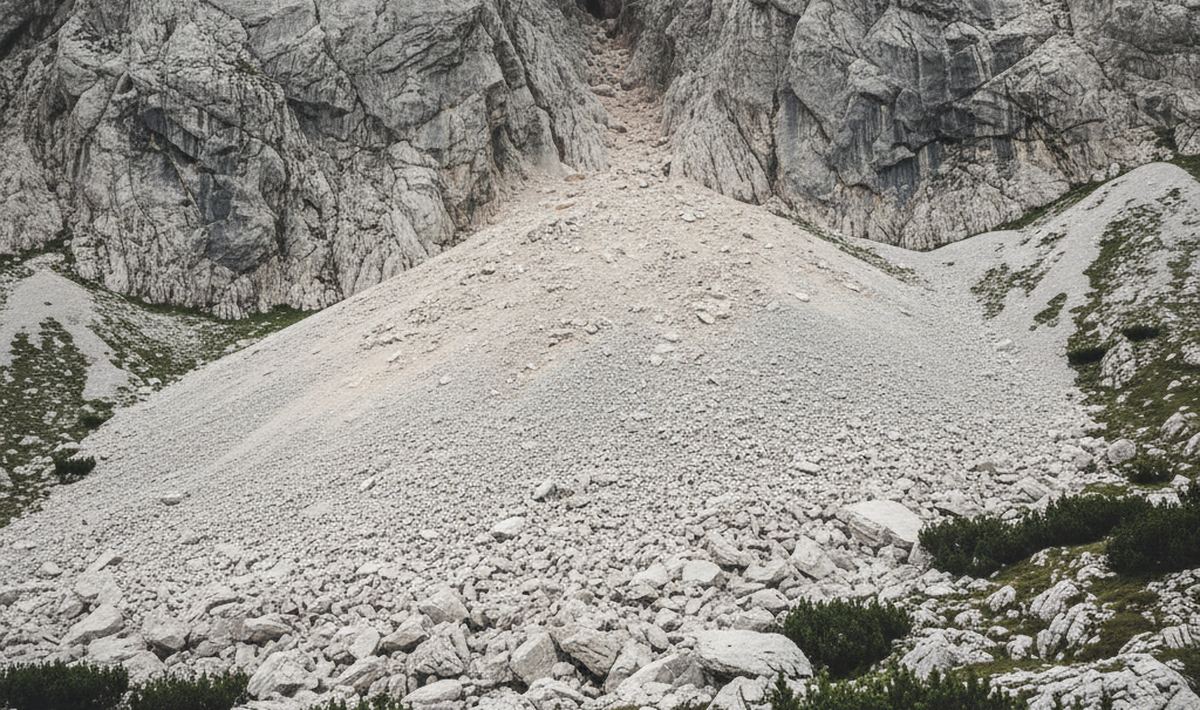
Dolomite limestone breaks into plates and the plates roll. Most of the walking is on exactly that: white scree, pale dust, flat stones the size of a hand that slide half a boot length under you on the descents. Paths are marked with red and white paint on rock, are often a foot wide, and are cut into slopes that fall away for a couple of hundred meters. None of it is technical climbing. All of it wants attention for six hours at a stretch, and it chews footwear, so bring boots with an edge to them and poles for the way down; the drop from Forcella Staulanza to the valley is 900 meters of zigzag in about two hours, and knees notice. Two of the eight days include a stretch with a fixed steel cable bolted into the rock, twenty to forty minutes of hands on iron and feet on holds. A harness, a lanyard and a helmet make that ordinary. Without them, do not start it. Both days have a walking line that goes round the cable and costs about 45 minutes and 200 meters of extra climbing. Say which you want when you first write, because it changes what has to be reserved.
The two o'clock storm, and the weeks the huts are shut
In July and August the sky over these valleys keeps office hours. Mornings are clear, cumulus stacks up over the Marmolada by about eleven, and thunderstorms arrive between two and five in the afternoon, sometimes with hail and a twelve degree drop in temperature. The whole rhythm of the week answers that fact. Breakfast at the huts starts at half past six, you are walking by seven, and you want to be off the open ground before two. Nobody enforces it; the weather does. On the calendar: the high huts run from about the third week of June to the third week of September, a few of them into early October, and the valley cable cars keep roughly the same dates with a closed fortnight at each end. Snow sits in the north facing gullies into the first week of July. Expect 22 to 26 degrees in the valley, 8 to 14 at 2,400 meters, and something close to freezing at dawn in September. Come in mid June or in October and half the beds and most of the lifts are shut, which makes it a different week, and we would rather say so now than in an email in May.
The half that needs a telephone call
Here is the number this office prints against itself. On this week, the hard half needs a telephone call. The easy half is genuinely easy. The two valley rooms, six of the ten nights, sit on the ordinary reservation sites with photographs and instant confirmation, and you could take them yourself in twenty minutes on a Tuesday evening. The other half is where it goes sideways. One hut answers email in high season in about five days and wants thirty percent by bank transfer before it holds anything. The second takes beds by telephone only, in Italian and German, in a window between six and eight in the evening, and quietly lets a held bed go if nobody rings back. The van that moves the bag between valleys is one man, a mobile number and a hand written diary. The guided day, if you want the cabled ground with somebody who does it for a living, comes from a local guiding office that answers after dark, because after dark is when they are down. So: four or five calls, in a language you may not have, at an hour that is the middle of your working day in Missouri. If that sounds fine, do it yourself. None of it is secret and none of it is closed to a member of the public with a telephone.
What the $3,140 covers, and who should not reserve it
From $3,140 per person covers the ten nights: six in valley rooms with breakfast, four in huts with half board, the bag moved between the valley bases, and a day by day sheet with the distances, the climbing, the walking times and the pass altitudes on it. It does not cover getting to Italy, which is yours; the lifts and buses, roughly 3 to 20 euro a ride depending on whether it is a valley bus or a cable car; lunches, which at a hut run 10 to 14 euro for a plate of pasta and a coffee; or the guided cabled day, which for a party of two or three lands somewhere around 350 to 420 euro. Every figure is confirmed by the supplier before anything is held. Insurance and travel documents are not something this office arranges or advises on. It suits somebody who already walks six hours with 900 meters of climbing and would get up and do it again. It does not suit somebody who wants a lie in, somebody who needs a lift back at four o'clock, or anybody expecting a quiet week: the huts are full in August and the partitions are thin. Two of the four beds can be dormitory bunks. If that is a problem, say so at the start, because it decides which huts can be asked at all.
Short answers to the usual doubts
Is air travel inside the figure at all?
No. Nothing that flies or floats is sold by this office, and no operator of either has an agreement with us, so the seats stay in your own name and your own hands. For what it is worth, walkers on this week usually come in through Venice, about 160 kilometers and two and a half hours by road from Corvara, or through Innsbruck, which sits closer to the northern valleys. Once your own dates are fixed we can put a request to a local car service for the road leg to the first bed, and tell you what the valley buses do on the days it is not worth paying for.
How fit is fit enough for this?
The measurable version: you can climb 900 meters in about three hours carrying seven kilos, walk six hours on rough stony ground, and get up and do the same thing the next morning, eight days out of ten. Altitude is not the difficulty here, since nothing on the week goes above 2,600 meters. Repetition is. People who finish this week sore are usually people who trained on flat miles and never practised a long descent. One hill day a week for two months, with poles, changes the whole experience.
Can we leave out the cabled sections?
Yes, on both of the days that have them. Each cabled stretch has a walking line that goes round it, costing roughly 45 minutes and 200 meters of extra climbing, and the two lines meet again at the same hut door. Tell us before anything is held, because the alternative on the Giau day arrives about an hour later, and that decides which afternoon we ask the van to move. If you want the cable and have never touched one, the guided day exists for that, one guide to two or three walkers, with the hardware included.
Do we pay this office anything?
No money reaches us at any point and we hold no card details at all. Each supplier takes its own deposit, under its own name and on its own terms: the hut wants a bank transfer in advance, the valley rooms take a card at the desk when you arrive, the van is settled in cash on the day it runs. Our commission comes from the suppliers after you have traveled. That is also why we are free to tell you that six of these ten nights are yours to reserve in an evening, and to mean it.