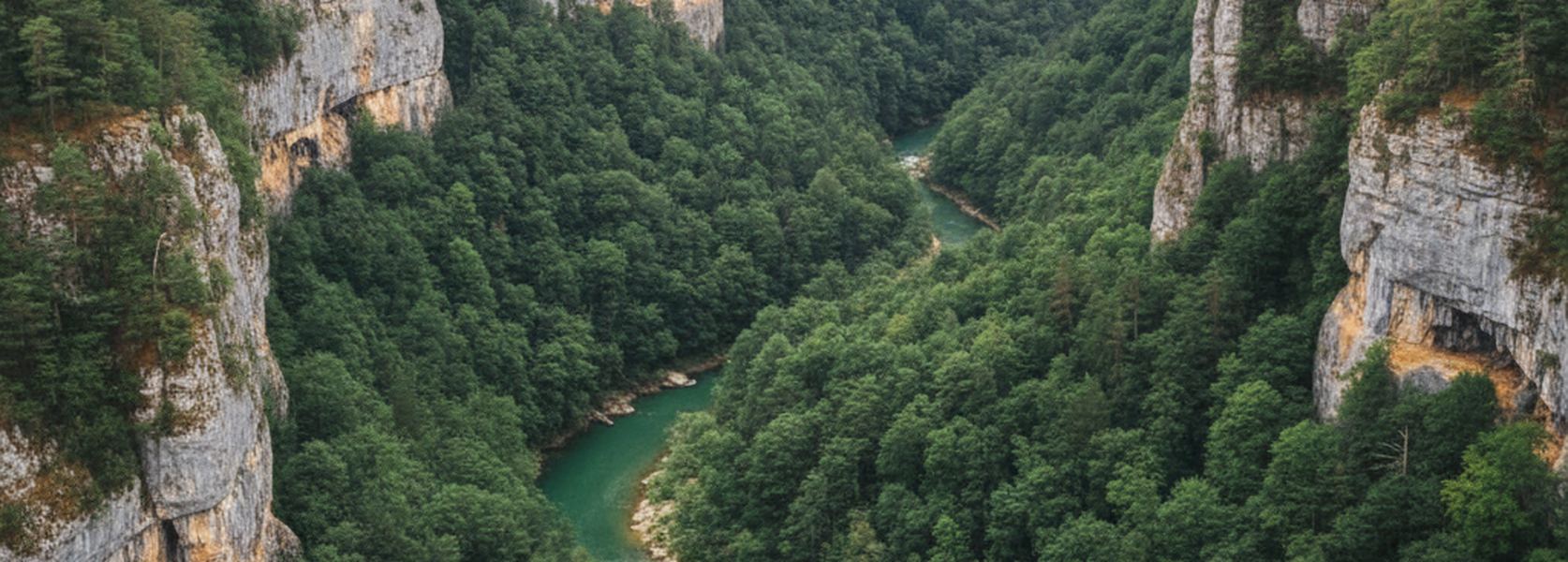
What twelve nights look like when you reserve a Balkan rail trip from Skopje
Twelve nights, six beds, two countries and one link where the railway was never finished. The rooms you could hold yourself in an evening; the hard half needs a telephone call. Reserve a Balkan rail trip from Skopje and the calls are the part this office does.
- Starting figure, per person
$2,870
- Nights
- 12
- beds you will learn
- 6
- Country
- North Macedonia
- How much of this you could arrange without us
- the hard half needs a telephone call
Confirmed as a final figure once the supplier holds the dates. Getting to the country is not included.
- Whatever is agreed comes back to you in writing from the supplier, before any money moves.
- No card is asked for on this site and none is stored: the supplier takes payment on its own terms.
- A request sent through the form is answered in writing within one working day.
Where the six beds are, in order
You land at Skopje on a flight you reserved yourself, because this office arranges no flying and holds no agreement with anybody who does. From the airport it is 170 kilometers of road south west to Bitola, and the first two nights are there, at 615 meters with the Baba mountains standing over the town. Then the train back up the plain to Skopje, 229 kilometers in a little under four hours, which is about 60 km/h once the stops are counted, and three nights in the city. Night six is Kyustendil, three hours by car across the pass. Nights seven and eight are Sofia, on the local train from Kyustendil, 90 kilometers in a bit over two hours. Nights nine and ten are Bansko, reached up a 760 millimeter mountain railway. Nights eleven and twelve are Plovdiv. On the thirteenth morning you go west again to fly home. Six rooms, each of them within walking distance of a working station, and you unpack six times.
Altitude, heat and the weeks that are left over
Skopje sits in a basin at about 240 meters with hills on three sides, and from December into February the cold air stops moving; the particulate readings in those weeks are bad enough that this office will tell you so instead of selling you the week anyway. July and August fail the other way. The valley south of the city runs to 38 degrees Celsius by mid afternoon, a shade over 100 Fahrenheit, and the older carriages have windows rather than cooling. That leaves late April to the middle of June, and the second week of September to the end of October, which is when this week is quoted. Bitola is ten degrees off Skopje in the evening because it stands higher, with Pelister at 2,601 meters behind it. Bansko is at 925 meters and the mountain line above it crosses a summit station at 1,267 meters, where snow closes the track some winters. Plovdiv is low, around 160 meters, built over old volcanic hills, and it holds the heat into the middle of October.
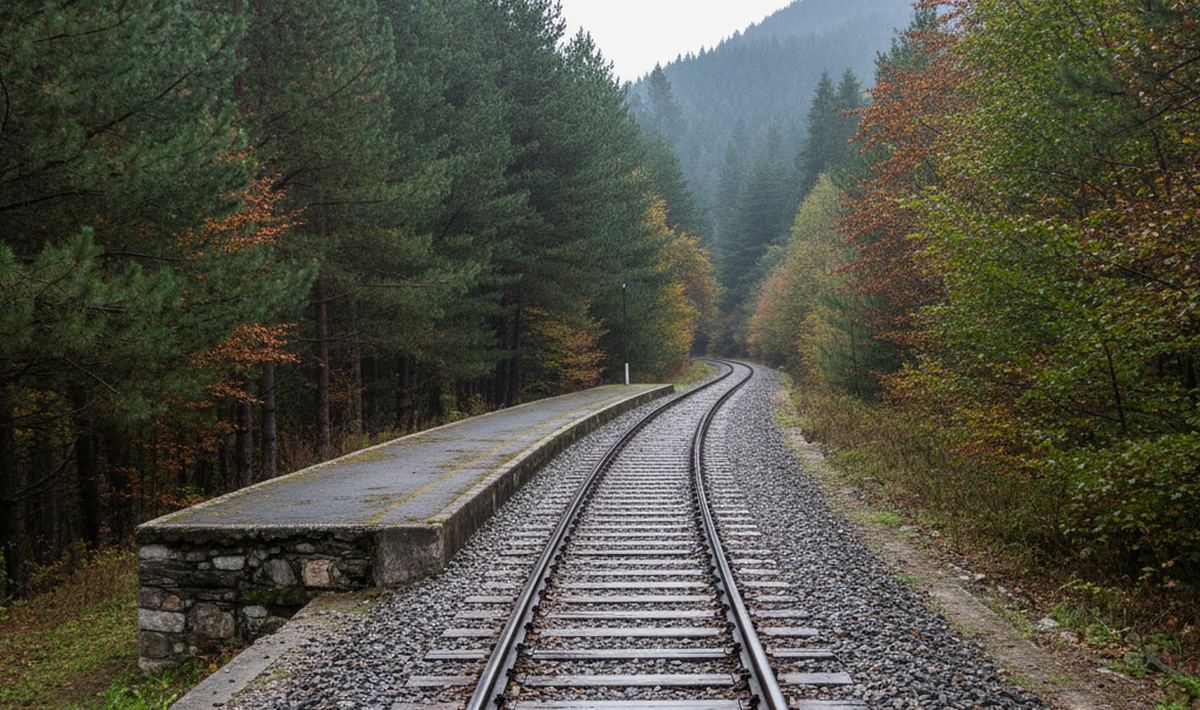
Five links by rail and one by road
Look at a map and one leg will puzzle you, so here it is. On the Bulgarian side the rail runs 21 kilometers past Kyustendil to Gyueshevo and then stops. The tunnel through the ridge to the Macedonian side has been surveyed, begun, argued over and left alone for most of a century, and it is not there now. So that link is a car: 150 kilometers, about three hours, climbing to roughly a thousand meters at the pass and dropping through fruit orchards on the far side. The stop at the summit takes ten minutes or fifty and nobody can tell you which in advance. This office will not dress a car up as a train. The other five links are rail, and the one that takes longest for its distance is Septemvri up to Bansko: a 760 millimeter track that covers 102 kilometers in about four and a quarter hours, an average of 24 km/h, with the window down because there is no other way to cool a carriage that old.
The part that is done at midnight
The split is not flattering to this office, so here it is straight. The six rooms are small houses and town hotels of the ordinary sort; you can find them, write to them and hold them yourself in an evening, and most of them answer in English inside a day. What is left is the moving. The state railway in North Macedonia sells its seats over a counter, on the day, in denars, so a place held from Missouri means somebody at this desk ringing a station whose useful hours are 07:00 to 15:00 local, which is midnight to eight in the morning in Kansas City. Engineering works shift the timetable and the notice of it is a sheet of paper on a wall. The car leg is one small firm with three vehicles and a mobile telephone. None of that is clever work. It is slow, and it happens at hours you would rather be asleep. From $2,870 per person covers the twelve nights and all six links, which divides out near $240 a person a night before you have eaten anything. Nobody here is given a card number: the houses and the ticket counters take their own money, and this office is paid a commission afterwards by the people it put the work with.
Who this fits, and who it will annoy
It fits somebody content to spend a day covering 200 kilometers and to count that as the day's work; who can carry a bag up station steps, because at four of the six there is no lift and the underpass is the only way to the far platform; who does not mind a 05:55 departure twice in twelve days; and who reads a timetable as an intention rather than a promise. It will annoy anyone who wants the twelve nights fixed now and untouched. Two of these six links have been shut for rebuilding at some point in the last three years, and one of them may be shut again by the time you go. If a week whose third day can be rewritten on the second evening sounds like a holiday spoiled, the same question has three other weeks behind it, and the answer one step back leads to weeks that stay in one place. This office would rather say that today than work it out from five and a half thousand miles away on a Tuesday night.
Short answers to the usual doubts
How much of this could we put together without you?
The beds, all six, in about an evening. The two Bulgarian rail legs sell online most of the time. What is left is the Macedonian seats, sold over a counter in denars on the day; the car leg, which is one firm and a telephone; and the checking of a timetable amended by paper notice. That is the hard half, and it gets done between midnight and eight in the morning our time. If you are willing to make those calls yourself, make them. The week is the same week either way.
Can you promise the mountain railway will be running while we are there?
No. It is a 760 millimeter line over a 1,267 meter summit and it closes for snow, for slipped ground and for repair, sometimes on a week's notice. What this office does is ring the depot eight days out and again on the morning you travel, and hold a road alternative that costs ninety minutes more and follows a different valley. If the line is down, you hear it from us before you are standing on a platform with a bag. Anyone who tells you it is certain has not rung anybody.
Twelve nights and six beds. How much of that is actually moving?
Five of the twelve days have a bed at each end. Two are long: bitola to Skopje is under four hours plus the transfer at either end, and Septemvri to Bansko is four and a quarter with a change out of a standard gauge train onto the narrow one. The other three run two to three hours. Seven days have no moving in them at all. If five moving days is more than you want, go back a question and answer it the other way.
What does the $2,870 cover, and what does it leave out?
Twelve nights in six rooms, breakfast where the house serves one, and all six links between them with seats reserved where seats can be reserved. It leaves out your flying, which you arrange, your meals, and the entrance charges at the late Roman site two kilometers outside Bitola and the theater in Plovdiv, which come to under thirty dollars a person between them. The figure is shoulder season, two sharing, plainest of the six rooms, and it is confirmed in writing before anything is held.